“Water for Life” Philippines Project Summary

The overall goal of the project was to provide the community of Apatut with potable water as a means of combating diseases and improving overall quality of life. Four assessment trips and three implementation trips were completed over six years, with the intention of installing a water storage and distribution system. However, before the system could fully be implemented, the project had to be cancelled due issues internal to Apatut. Unfortunately, their water cooperative responsible for maintaining and operating the system dissolved, and the project could no longer be sustainably maintained long term. However, the EWB-Philly still saw success through building the community’s health and sanitation education, implementing a successful solar disinfection program, and identifying a viable groundwater source.
Community Background and Project Need
The Barangay of Apatut, located in the Northern Philippines on the island of Luzon, is home to 742 residents across seven sectors, primarily employed as unskilled laborers and farmers. Water is scarce with limited wells powered by hand pumps spread around the community. Some residents must walk significant distances and share the wells with up to a dozen other families. Additionally, poorly constructed latrines pollute the groundwater leading to illness. EWB-Philly partnered with the Rotary Club to address these water and sanitation challenges.
Assessment Trips
EWB-Philly’s first assessment trip in March 2010 aimed to establish relationships and identify water sources. When the proposed surface spring proved insufficient due to low flow, the team adapted to plan to drill a new well. After surveying 157 households and collecting water samples, the team established a 30-gallon-per-person-per-day supply target. Future assessment trips provided the team with opportunities to complete water quality tests. EWB-Philly also partnered with the St. Louis College out of San Fernando, Philippines who offered to complete a topographic survey of the community.
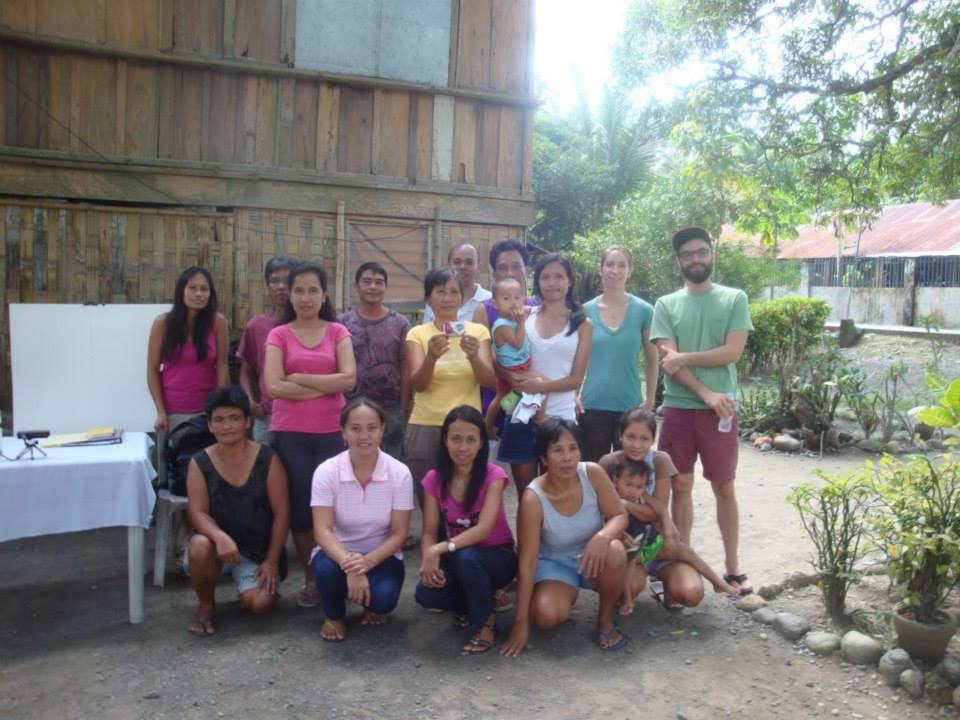
Travel members also met with the Water Cooperative, a community group founded by the Rotary Club to maintain and operate the water system. The Water Cooperative worked with the Barangay Council (the local government) to address the water needs of Apatut. These meetings strengthened the connection between EWB-Philly and local residents. On the first trip, the residents of Apatut even decided to move their annual Barangay Fiesta to coincide with the last day the team was in the community. Team members were treated as guests of honor and given a heartfelt farewell.
Implementation Trips
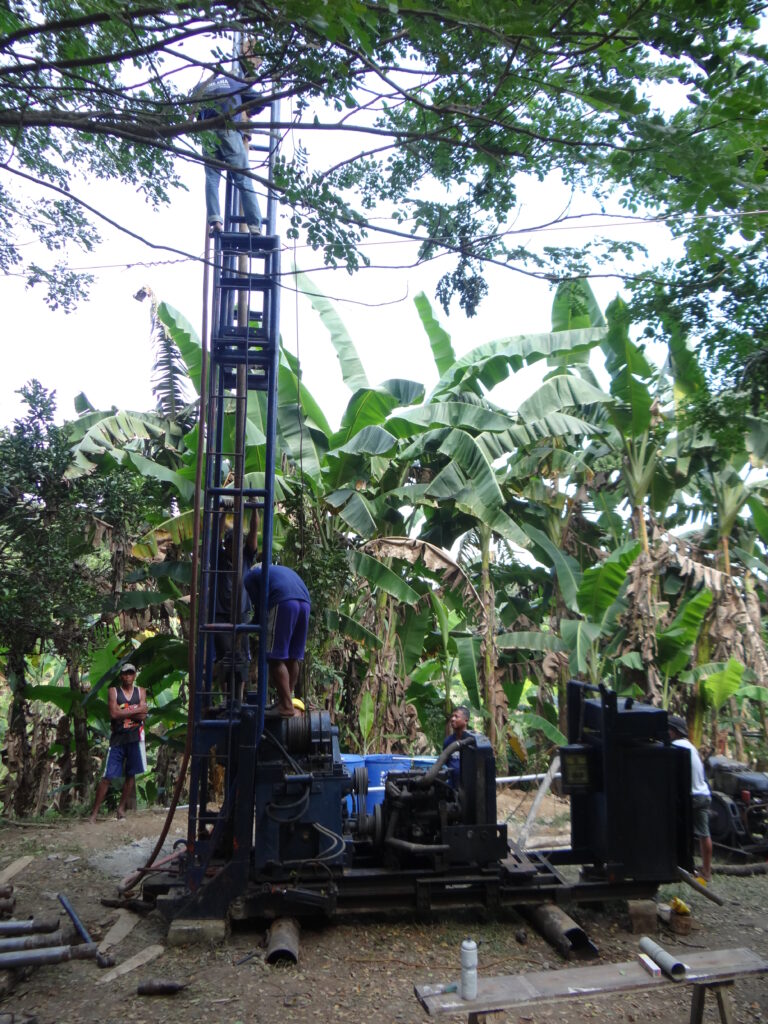
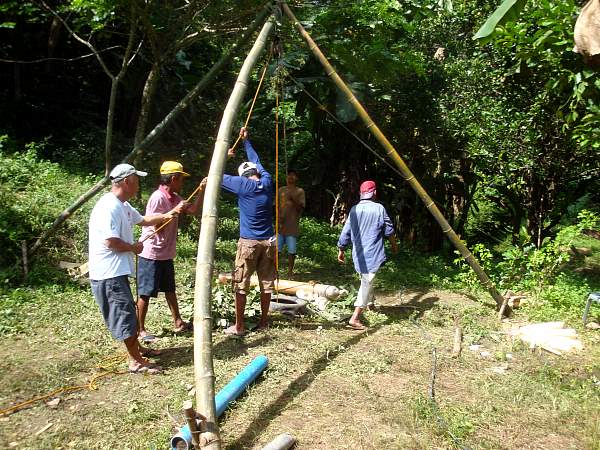
In January 2012, the team was ready to start drilling at the new well location identified in the first assessment trip. Team members supervised a well drilling contractor while continuing to build their relationship with the local community and gather data for a potential storage tank. The drilling process was lengthy and a second team visited two months after the first team to see the conclusion of the well drilling. The final depth of the well reached 100 meters, and while the well did not fill with water initially, natural changes to the underground aquifer led to a healthy borehole that could provide a substantial amount of water to Apatut.
SODIS Pilot and Tippy Tap Installation
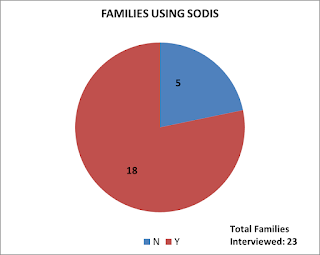
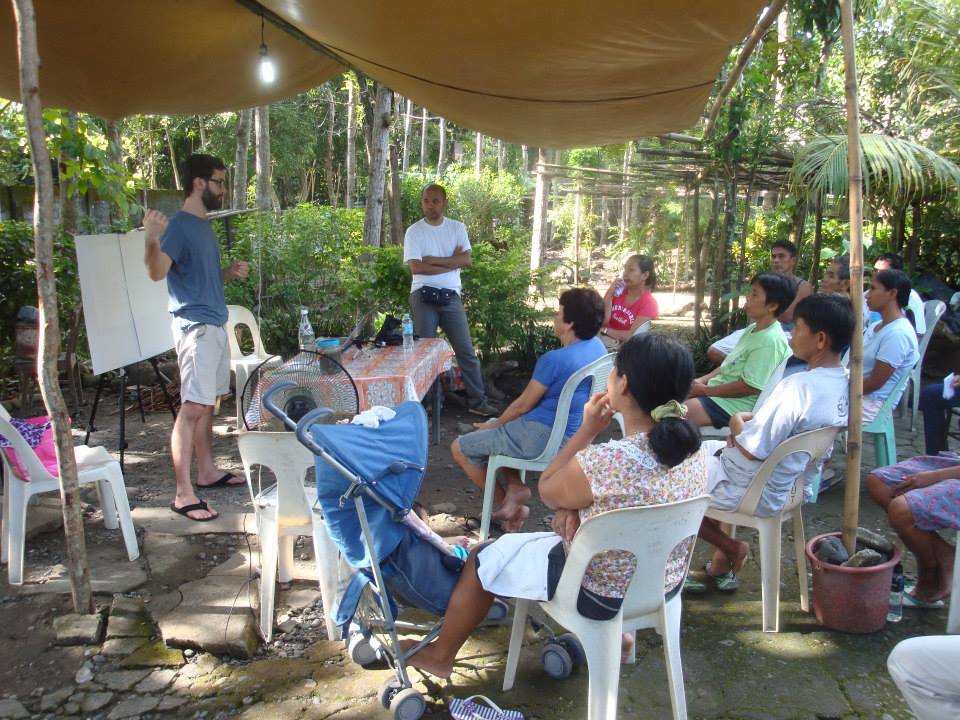
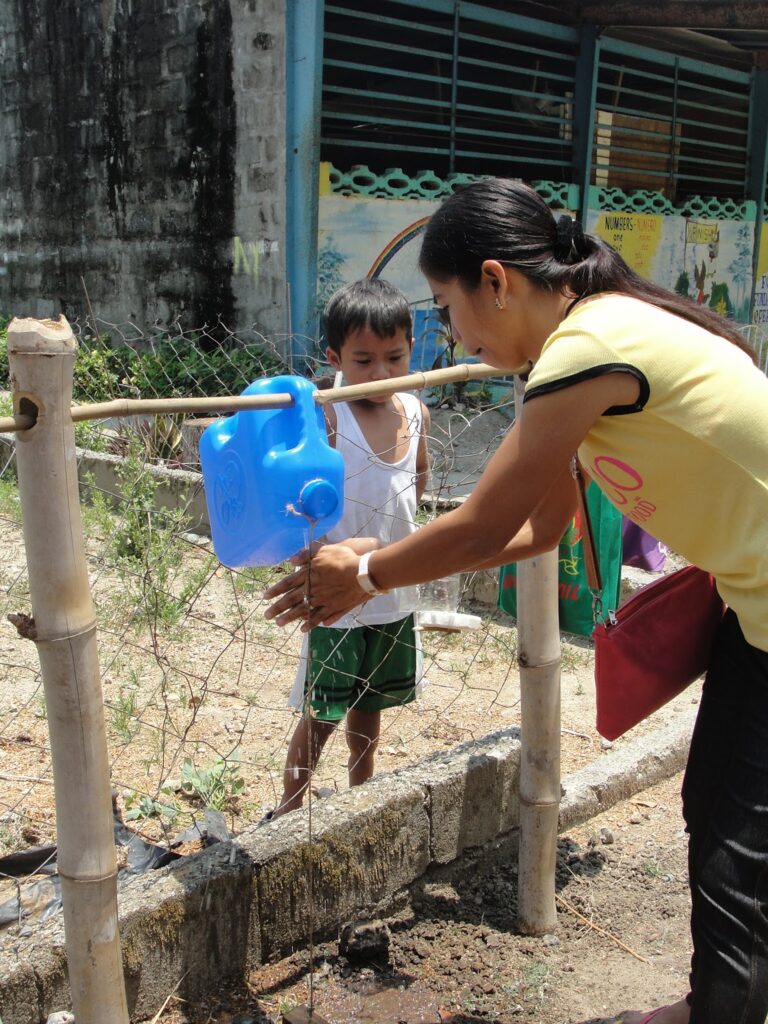
While the drilling of the well was the primary objective on the team’s trips, EWB-Philly also wanted to start working to address the contaminated ground water and improve sanitation practices. Team members met with residents to explore the use of water treatment options such as chlorine treatment, bio-sand filters, and solar disinfection (SODIS). The majority of community members were interested in solar disinfection, which involved filling transparent plastic bottles and exposing them to full sunlight to kill bacteria, viruses, and parasites. In total, the SODIS program was piloted with 34 families recieving great feedback from community members. EWB-Philly also built a hands free washing station at the local elementary school, called a tippy-tap. Team members met with around 60 students to showcase how the tippy-tap works and provide education on good sanitation practices.
Project Closeout – December 2016
After lengthy discussions within the Chapter, the ultimate decision was made to cancel the project in December of 2016. The leading factor leading to this decision was the lack of a source of income to maintain and operate the water system sustainably long term. The water cooperative was supposed to be the body responsible for gathering this income and maintaining the water system. However, it became clear to the project team that community members and the Barangay Council had limited interest in reestablishing this coop.
While the team was disappointed with the final outcome of the project, EWB-Philly’s positive impact in Apatut should not be understated. The Chapter was able to build the community’s health and sanitation education, implement a successful solar disinfection program, and identify a viable groundwater source.
Blog Posts
-
UPDATE: Solar Disinfection (SODIS) Pilot Program
During our November 2014 trip, EWB-USA Philadelphia implemented a SODIS pilot with thirty two (32) families from different sectors as participants. Families were selected before our arrival to the community by Gloria Opinaldo, one of the community members. In April 2015, EWB-USA Philadelphia was able to interview twenty-three (23) of the families that were participating…
-
Tippy-Taps: A new sanitation approach for the community of Apatut
Robert DiFilippo and I visited Apatut last April. One of our goals for the trip was to build a tippy-tap at the community elementary school and to present the students with effective sanitation practices. Tippy-taps were first developed by Dr. Jim Watt of the Salvation Army in Chiweshe, Zimbabwe1 and are now used in several…
-
Tippy Taps 101: The Basics
During the most recent assessment trip to Apatut in November 2014, the teachers at the community’s elementary school requested a Tippy Tap for student and faculty use. A Tippy Tap functions as a sink in places where running water may not be available. Therefore, in lieu of a sink, a Tippy Tap is essential for…
-
November 2014 – Travel Team #2: “We have a well”
EWB-Philadelphia Travel Team #2 consisted of me and Loyda Garcia; and professional hydrogeologist Bob DiFilippo remained with us in Apatut, Balaoan since arriving the week before. Exciting times for both Loyda and I, as it was her first time in the Philippines, and my second trip here (November 2012). It was warming to know that many of the residents had…
-
November 2014 Trip – Travel Team #1
I traveled to Apatut in November, as a part of the first travel team, along with Bob DiFlippo and Steve Kim. Having never been to the Philippines, or anywhere else in Asia, I did quite a bit of “Googling” before the trip, and I quickly learned how diverse this country is. It is comprised of…
-
Learning from the People of Apatut
Often as engineers, we can be found focusing overwhelmingly on the technical issues surrounding a particular problem that we are presented with. With good reason, of course – we understand well that we need to arrive at practical solutions by leveraging our tool box of scientific principals, empirical formulas, and our trusty skills in mathematics….