This Page is still under construction!
Introduction
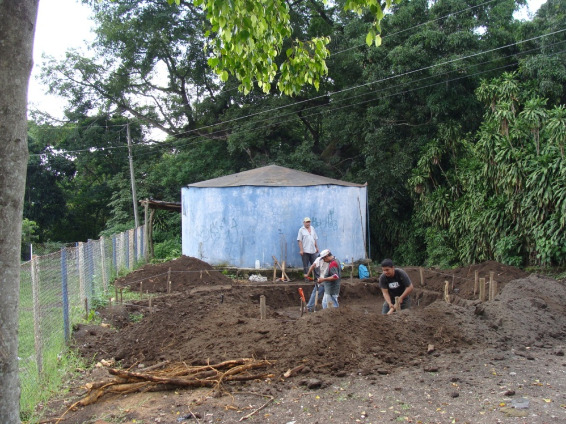
EWB-Philadelphia has recently embarked on collaboration with Project FIAT to provide water to Las Delicias, El Salvador, a poor community near San Salvador. The village of Las Delicias has a population of over 5,000 people distributed in 600 homes on hilly terrain. Water is delivered to homes throughout the community by gravity from three large water storage tanks located at the highest points in the community. Water is supplied to the tanks from a spring higher in the mountains and from a well situated at lower elevations. Water is pumped from the well to the storage tanks for several hours each day, but the tanks drain quickly because a culture of water scarcity exists in the community that leads to hoarding of water in many storage tanks and vessels. Also the community has concerns that the water contains bacteria and parasites. Clean potable water will help this community in all aspects of their lives.
A pre-assessment of the current water supply system was conducted July 2009 revealing several concerns with the water supply system. The major concern is inequitable distribution of water to members of the community – while homes close to the water storage tanks receive water almost every day, other homes receive water only once per week. Other concerns include corrosion of pipes, failure of pipes, and ineffective chlorine disinfection. EWB-Philadelphia will be conducting an assessment trip in the near future to gather additional data.
Program Background
The existing system includes a well pump, holding tank, piping to three storage tanks and a gravity piping distribution system to approximately 500 homes. It has been found that the system generally operates as designed but has some basic deficiencies making it expensive to operate and making the distribution inequitable. The cleanliness is also questionable due in part to the method residents use to store water and possibly due to contaminants in the distribution system. Since water is only pumped into the system for approximately four hours per day; the residents store the water in all variety of containers for later use.
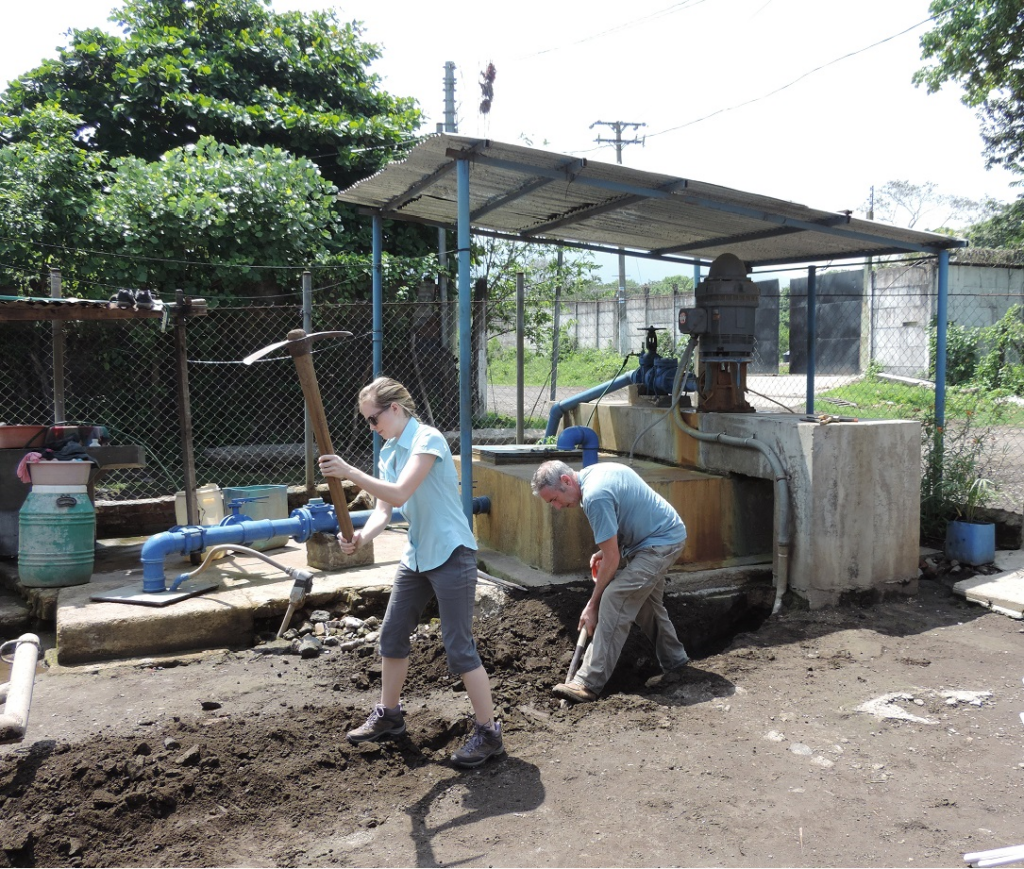
It has been found that the well supply riser pipe experiences a failure approximately every four months which costs the residents quite a bit of money to fix. This ongoing maintenance cost uses a large portion of the available funds that could be used to provide a better and more reliable water source to the community. We have identified this as one of the goals of this project: to design and install a better riser pipe supply system for the well that will not require frequent replacement. This will free up operating revenue to upgrade the system and address some of the other deficiencies.
Description of Community
Las Delicias is a community of about 600 homes and 3000 people situated on the western slopes of Volcan San Salvador about 15 miles northwest of San Salvador, the capital of El Salvador. The community is fairly sparse and anticipates growth to over 1000 families over the next 20 years. The communities residents suffer from lack of employment, but over recent years several NGOs have begun making improvements within the community that are improving living conditions, health, and education.
The residences of Las Delicias are Latin American and mostly agricultural. Some are Indigenous. The Village of Las Delicias was disrupted during the civil war, as were many villages, there is no real governmental involvement. There is some military and police presence. Most community event planning is done through the parish council. Unemployment is very high. Those who are employed work in garment factories or agricultural labor. The average income is around $10 a week. Most people are Catholic.
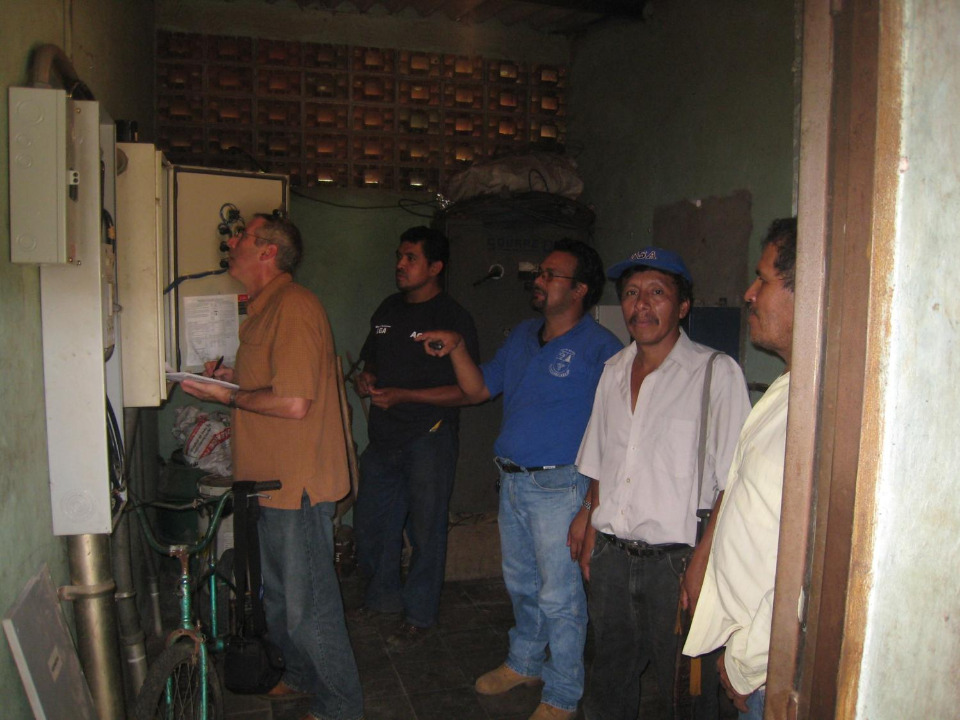
Las Delicias has a water supply system that was installed about 20 years ago. This system includes buried piping to individual households, three storage tanks at upper elevations in the community, over 150 valves to control distribution, a well at a lower elevation in the community and a pumping station with two pumps: (1) submersible pump in the well and (2) transfer pump for delivering water to two of the storage tanks. The three storage tanks all receive water by gravity from a spring located several kilometers away on the mountain and two of the storage tanks receive water from the well. The well pump and transfer pump operate about 4-6 hours per day. Water flows by gravity from the tanks to individual households. The valves throughout the community are operated manually by a single operator who walks throughout the community controlling which zones have running water at various times during the day. However due to topology and limitations of the piping system design, the water supply to individual households varies considerably. Some homes receive water almost every day whereas other homes reportedly receive water less than once per week. A culture of scarcity exists in the community so that when the water is running, residents collect water into many available containers so that they will continue to have water until the next time the water is running.
Project Location
Longitude: 13° 45’ 13” N
Latitude: 89° 20’ 53” W
Project Impact
Persons directly affected: Local Community (~3,000 people)
Persons indirectly affected: Neighboring Communities
Pre-Assessment
Objectives of Site Assessment Trip
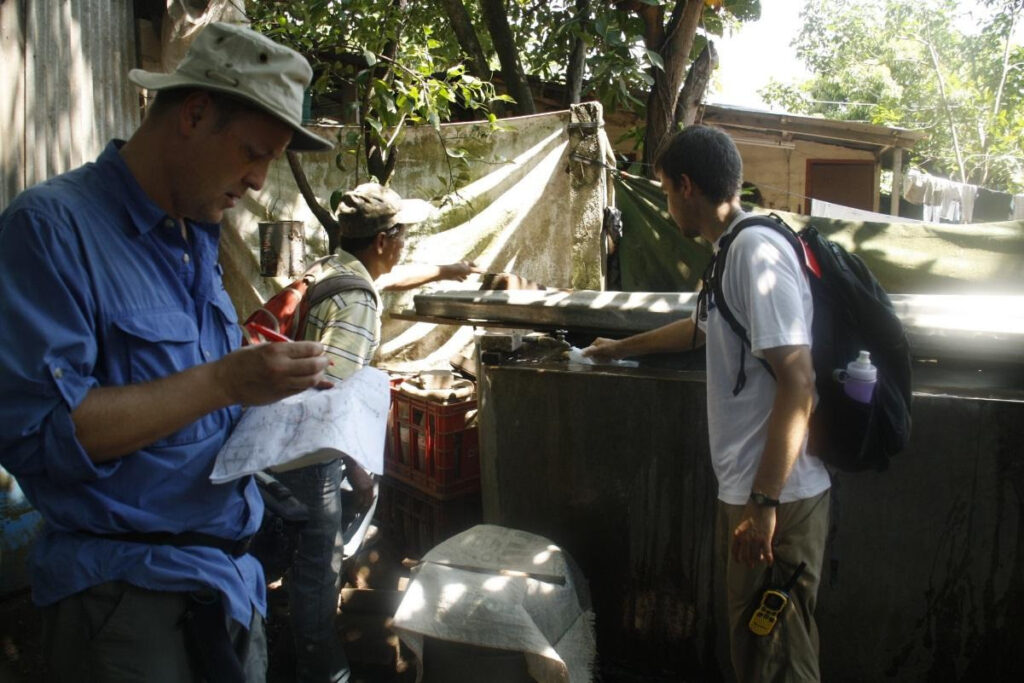
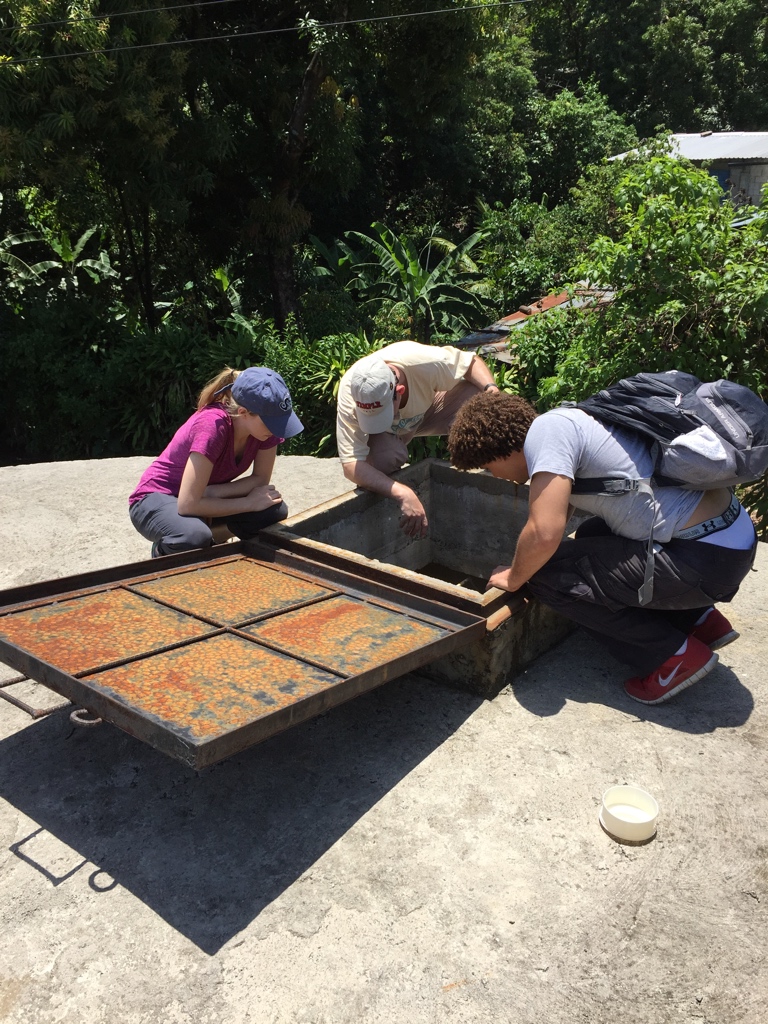
During this first trip we hope to meet with the community and Project Fiat volunteers to better understand their needs. We would like to gather as much technical information as we can with regard to the well supply riser pipe design and deficiencies as well as other portions of the overall system. We hope to come back with enough information to be able to develop a revised supply pipe design. We plan to take water samples from various places in the distribution network and have them tested locally for contaminants. We also hope to develop an understanding of how the water is distributed and how individual households store and manage their supply. We plan to identify and prioritize the needs of the community so we can provide help where it is needed most.
- Evaluate failure of well riser pipe to improve design and reduce frequency of replacements.
- Evaluate spring source and supply lines between spring and storage tanks to determine potential for increasing yield.
- Measure water quality indicators at several source points (well source, spring source)
- Discuss design options with community such as point-of-use water treatment systems, water meters, automatic water shut-off valves on household pilas.
- Initiate community health assessment.
- Meet with engineers who installed well or water authorities to find well information. Determine local codes and identify regulatory agencies.
- Measure elevations of critical distribution points in water system.
We also plan to work with the NGO (http://www.fimrc.org) running the health clinic to help with the health assessment portion of this project.
Community Relations
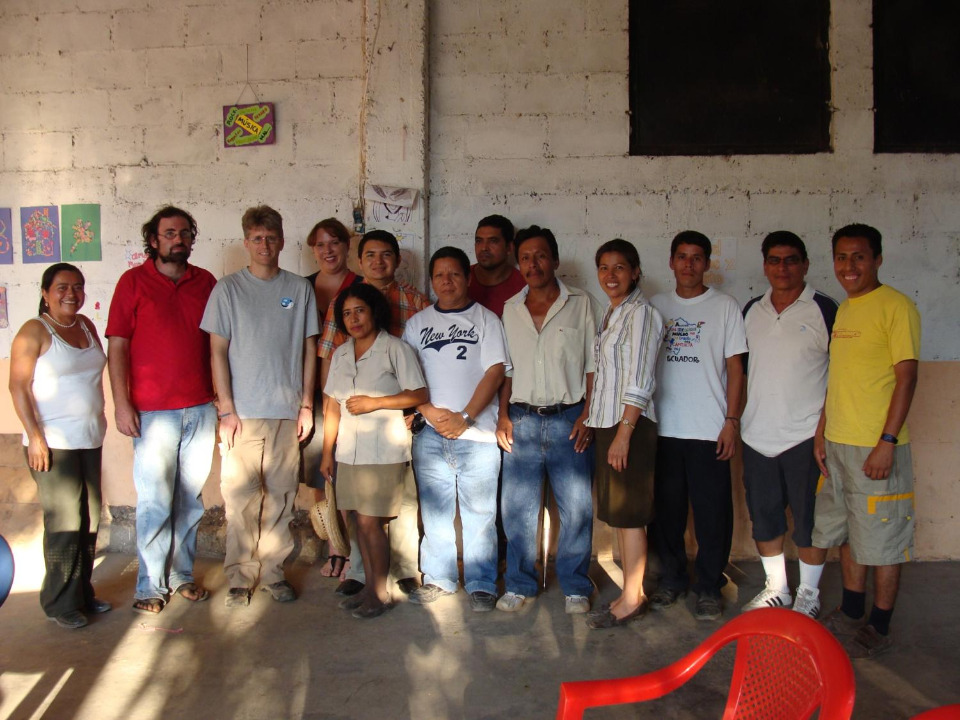
The EWB-PHILLY project team is in regular (approx. weekly) communication via email with Christina Quintanilla, the president of the Las Delicias leadership council. The community has a strong leadership council that works closely with FUDESCA to manage the financial aspects of projects in the community. Sister Gloria Petrone also has many excellent personal connections in the community because of her years of dedication to Las Delicias. We believe that the communication structure will be effective for preparing for the project, implementing the project, and tracking the project post-implementation.
Community Priorities
In July 2009, Project FIAT (including Sister Gloria Petrone, David Haeussller, and Rich Cairncross) met with the Las Delicias leadership committee (including Christina Quintanilla) to discuss the needs of the community. The leadership shared many problems in the community, and they feel that inconsistent and in-equitable distribution of water to the community is the most pressing need at this time.
Other projects that have been identified by the community are street lighting for safety and improvement of latrines.
Site Mapping
The site is well documented and we have an actual drawing depicting the piping distribution system. We will supplement this information using GPS to find elevations and verify actual positions on the drawing. An image of the map of the community and pipe system is included at the end of this report along with a Google Earth image of the community with the map superimposed.
Technical Data Collection
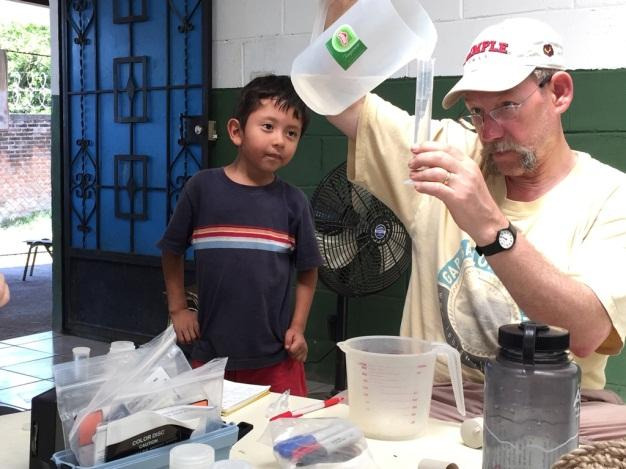
We plan to take water samples while on site and have them tested locally. One of the members of our team; Rich Cairncross, will be teaching at the university in El Salvador and plans to use his contacts to help find a reliable water testing agency or company in the local area. We also plan to inspect the well piping and equipment while on site. We have asked that next time they replace the well pipes, they set the old pipes aside for us to inspect prior to disposal. We hope to garnish enough information to determine the cause of early failure during this trip. We suspect substandard piping and/or improper installation procedures as well as the possibility of accelerated corrosion due to either galvanic or chemical/biological interactions.
We will research any design codes that may be applicable by working with the local NGO to find out which local authorities have jurisdiction.
Monitoring and Evaluation Data
Metrics for measuring the success of project
Technical:
Water Quality: Test water source before and after implementation of additional treatment measures
Water Quantity: Community questionnaire surveying the availability of water (quantity and frequency) during dry season before and after project
Economical:
Productivity: Community surveys in relation to time usage (water collection and treatment), lost productivity time due to illness, costs of health care and costs of fuel source
Project Costs: Costs of maintaining current and future water system, average money spent buying water should be calculated before and after the project
Social:
Community Needs and Expectations: Reliability for years to come and reasonable waiting/filling time
Community Knowledge: Knowledge of clean versus contaminated water and basic maintenance/upkeep of system
Health Assessment: Community questionnaire surveying prevalence of water-borne illnesses and general sanitary conditions before and after project implementation
Project Feasibility
The feasibility of this project is generally good due to the fact that we are working with a well funded NGO that has a successful history in the community. The challenges we face are technical and logistical in nature. We know for instance that a well designed and constructed well in the US will provide many years of service without needing to replace the riser pipes. This community is replacing the riser pipes in their well approximately every four months. So it stands to reason that we should be able to modify the design to get much better service out of their well riser pipes. We do foresee possible issues in getting the same quality materials as used in the US and in getting the cooperation of the installers to follow proper installation procedure. We feel that if we can overcome these challenges we will be able to provide a long term solution.
Another challenge we foresee is in how to configure the system so as to distribute the water equitably. Since the water only runs for about four hours per day and some homes have much better flow rates than others; there are great disparities in how much water individual homes receive. It may not be practical to modify the distribution system taking into consideration the scale of the system and operating procedures. We hope to work with the community to find the most practical and equitable solution to this problem.
The challenge of water cleanliness may be one of trying to educate the residents as to how they should treat the water that they store in containers. We will consider how best to treat the water once we have sample test results back and have had a chance to see firsthand how the water is distributed and consumed. We realize that installing a treatment system at the holding tanks may not guarantee cleanliness at the point of use.
Our criteria for deciding on a particular task will be whether or not we feel it is practical both technically and financially and whether it is something the community will accept as positive. The reason we are focusing on the well riser pipe at this time is that we believe it is a feasible project that will provide the most benefit to the community with the least amount of effort. If after our trip we feel differently about this task we will reevaluate our priorities.
Mentor Assessment
The water distribution system at Las Delicias appears to be well designed and composed of properly engineered components as far as we can tell from basic drawings, photos and eye witness reports we have been able to obtain. However, reportedly there are severe problems with maintenance, inequitable water distribution and water user health issues.
We have assembled a team of professionals with varied engineering education, professional experience, and certifications adequate for the project. Initial contacts have been through the local NGO representative in Las Delicias as well as personal on-site experience by two of our team members who travel to the area on a semi-routine basis. Approximately half of our team members communicate at varying levels in Spanish, so we have begun a routine dialogue in Spanish between the Team in Philadelphia and the NGO representative in Las Delicias. We are in a learning environment regarding communications. We submit specific questions in Spanish to the NGO representative; receive partial reply to our queries and thus we improve our understanding of the engineering problems over time. Using photographs, drawings and descriptions of the well, pumps and distribution network systems received from Las Delicias, we have developed schematic sketches that we scan and mark up with questions and comments to aid communications via email with the local contact person.
Despite good progress in understanding and defining the engineering problems in the Las Delicias water production and distribution system, we still have gaps in our understanding that we hope to resolve by performing the assessment trip outlined in this proposal.
| Project Lead Health Point Person #2 | Brian Hamill |
| Mentor #1 | Russ Turner |
| Health Point Person #1 | Dave Haeussler |
| Education Lead | Rich Cairncross |