
Tanzania Project Summary
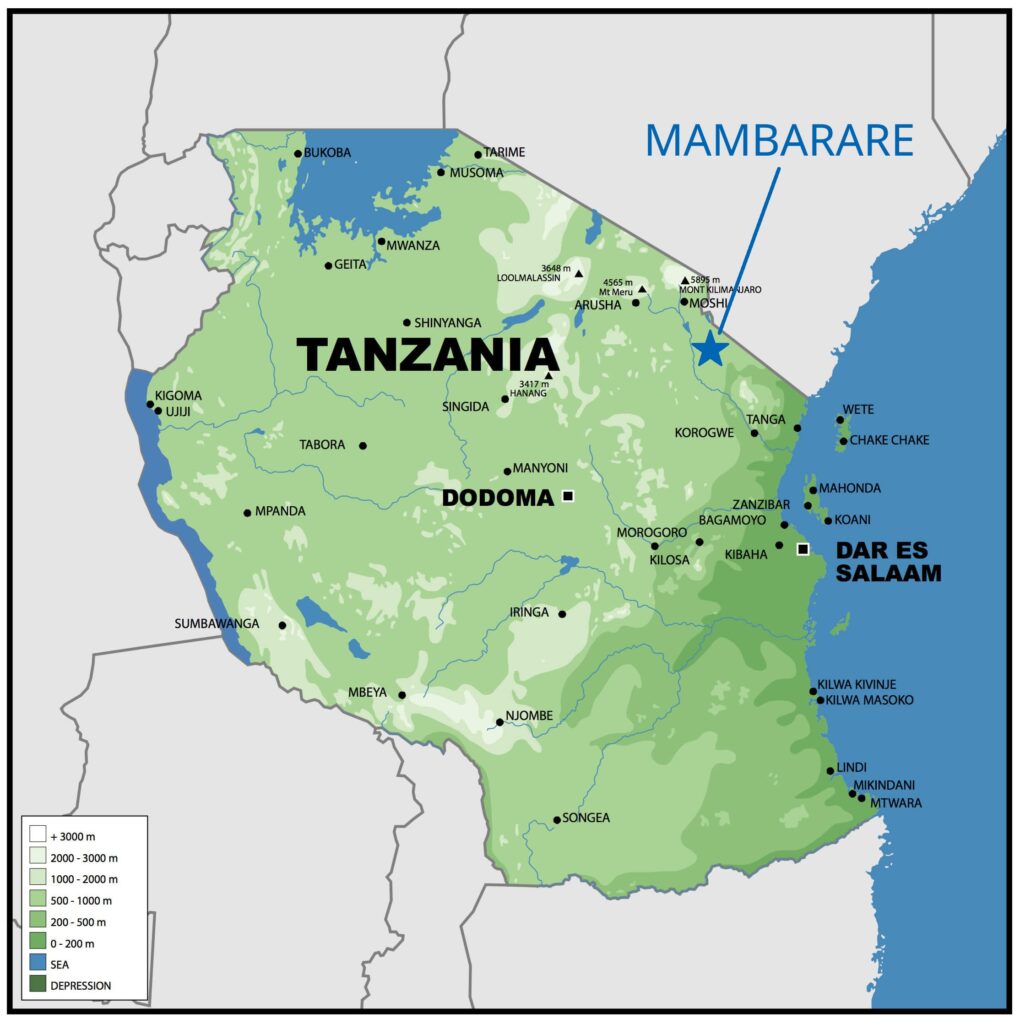
EWB-Philly has partnered with the Grail to bring a drinking water source to 1250 community members in Mambarare, Tanzania. The essential task of gathering freshwater is typically left up to women and children, who must walk 7 kilometers (4.3 miles) at least once a day to reach the closest well in a nearby community. Our chapter will spend the next three years working with the residents of Mambarare to drill a new well and install a water storage system. Access to a dependable source of freshwater will allow the women and children of Mambarare to pursue more opportunities, such as education and leadership roles, while also improving public health and peacefulness within the community. EWB-Philly’s first trip to Tanzania is currently scheduled for October 2026.
last updated 6/14/2026
Community Background
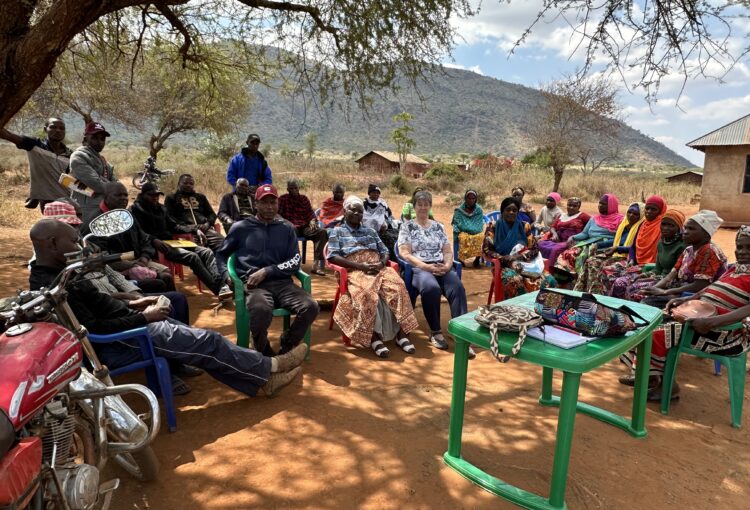
Mambarare is a rural community made up of 1250 residents across approximately 250 households based in the Kilimanjaro region of Tanzania. The majority of the community lives in poverty and depends on subsistence farming to meet their needs. Residents used a nearby mountain spring when the community first formed in the early 90’s, however when the spring dried up in 1999 residents had to start using the wells in adjacent developments. The region also includes two boarding schools, Kamani Primary School and Mgagao Secondary School.
Women and children commonly bear the burden of gathering water for the household. This leads to gender based discrimination as women spend significantly more time gathering water than men. Women are also the targets of domestic disputes and violence, as they take the blame for not gathering enough water for the household’s drinking, cooking, and sanitation needs. Children miss educational opportunities, and some children that cannot wash regularly have been the victims of genital mutilation due to local beliefs on cleanliness.

The community members of Mambarare, typically women and children, walk as far as 7 kilometers daily to retrieve fresh water.
The Grail
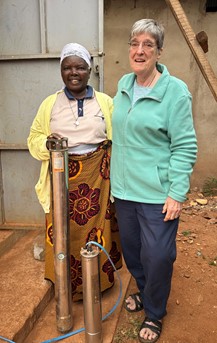
EWB-Philly has partnered with the Grail, a global community of women from different cultures, social backgrounds and generations active in 21 countries. Grail members work locally, nationally and internationally to advance peace and justice, and to create a sustainable world. For over 100 years, The Grail has worked to empower women to work for transformation and to contribute to lasting solutions, addressing critical issues that impact girls and women, especially the most vulnerable. The International Grail is a recognized Non-Governmental Organization with consultative status at the United Nations as granted by the Economic and Social Council (ECOSOC), since 1998.
The Grail in Tanzania’s mission includes work in many areas to improve the lives of women and society. These areas include education, community development, health, agriculture, book selling, catechesis, and more. The Grail in Tanzania founded and operates 3 Pre/Primary schools, a secondary school for Girls and a Vocational Training College. The Grail also operates two Health Care Centers. Approximately 105 members, and others exploring Grail membership, live in four residential Centers. The Grail has been working in local communities utilizing a Training for Transformation participatory process (https://tftinpractice.org/) that works within the community to identify problems and community led solutions.
In 2021, through community outreach focused on reducing female genital multilation (FGM) and gender-based violence, Grail members met villagers in Mambarare. They learned that lack of access to water can lead to increased incidents of FGM and violence in homes. Since then, villagers and the Grail have agreed that better access to water can promote safety for girls and women and more harmony in the homes. Mambarare community leaders agree that access to water is a priority for farming, animal care and economic development.


The Grail in Tanzania works to improve the lives of women and society in areas such as education, community development, health, agriculture, book selling, catechesis, and more.
Rowan University Chapter
For this project, EWB-Philly has also partnered with the Rowan University Chapter of Engineers Without Borders. This partnership aims to give students opportunities to work with experienced engineers while providing EWB-Philly members with mentorship opportunities. The Philadelphia Chapter and Rowan Chapter are committed to work together to best serve the residents of Mambarare.
Project Phases
Assessment Phase
October 2026
In this first phase, the EWB-Philly team will visit Mambarare to collect data and ensure the feasibility of the project. Team members will meet with community members to further understand their needs and discuss the scope of construction. A community led water committee will be formed to guide EWB-Philly’s assessment, and ultimately be responsible for the water system. The potential locations of wells and water taps will be surveyed, and the team will gather all information needed to develop a detailed design. Baseline data will be collected that will be used to evaluate the project, as discussed in the Evaluation Plan. EWB-Philly plans to visit Mambarare in Summer 2026, and aims to finish the assessment phase before 2027. This phase is estimated to cost $14,000.
Implementation Phase
Summer 2027
EWB-Philly will develop detailed construction plans and work with a contractor to install a well and distribution system in Summer 2027. Data collected during the assessment phase will be used to ensure the design will be sustainable and meet the needs of the community. Following construction, EWB-Philly will work with the water committee to discuss the operation and maintenance of the water system, and provide all necessary training. The community will be left with all the tools and resources required to manage the water system independently. The implementation phase will conclude by the end of 2027, and is estimated to cost $41,000.
Monitoring & Evaluation Phase
Summer 2028
EWB-Philly will return to the community one year following construction completion in Summer 2028. This trip will allow the team to collect data and perform a complete evaluation on the success of the project. The team will also be able to provide additional training on the operation and maintenance on the water system. Following the end of the Monitoring & Evaluation phase, the project will be closed out and the water system will fully be in the hands of Mambarare. This final phase of the project will be completed by the end of 2028 and is estimated to cost $18,000.


The estimated cost to complete the Tanzania Project is $73,000.
Fundraising Efforts and Events: Water for All 5K

We need your help to raise money for the Tanzania Project! We host at least one fundraising event every other month. Our next big fundraising event is the Water for All 5K on June 13th. All money raised from the 5K will go towards funding the project to support project design, materials, construction, and the travel required for engineers and volunteers to work alongside local partners. EWB-Philly is a fully volunteer based organization. All funds donated will directly benefit the community members of Mambarare.
CLICK HERE FOR RACE RESULTS!!!!!!
Our chapter is composed of a small leadership team and several dozen active general body members. Learn more about who is a part of our Chapter at this page!
Water for All 5K Partners
EWB-Philly is grateful to all of our sponsors who have donated to support Mambarare.